
Master of Design: Course Details, Specializations & Career Scope
Walk into a well-designed room and most people won’t notice anything unusual. They’ll just feel comfortable and move on with their day. A trained designer can’t switch that off, though. They’ll clock the ceiling height without meaning to, wonder why the light hits that one corner the way it does, and start quietly picking apart why the space works at all. That habit of noticing what everyone else walks past is basically what a Master of Design tries to build in you, on purpose, over two years.
A bachelor’s degree hands you the toolkit — software, technique, the basics of how to execute an idea. A master’s is a different animal. It pushes you toward messier questions. Why does this material choice actually matter? What is this space quietly telling the people inside it? How do you design something responsibly when half the industry is still figuring out what “responsible” even means right now? If you’ve already got a B.Des, or something close to it, and you’re on the fence about spending two more years in a studio, this should give you a fairly honest picture of what the course involves, what you can specialize in, and where it tends to lead.
What Is a Master of Design (M.Des), Really?
Strip away the brochure language and an M.Des is a postgraduate program for people who already get the basics and want to push past them — into research, deep specialization, and design thinking that doesn’t just execute a brief but questions it first. A bachelor’s teaches you how to design something. A master’s asks you to defend why you designed it that way, and whether it actually holds up once you factor in sustainability, culture, or plain human behavior.
It has less to do with picking up new software (though you probably will anyway) and a lot more to do with sharpening judgment. By the end, you’re expected to sit across from a client or a jury panel and argue for your choices with something more solid than “it looked right to me.”
Course Duration and Eligibility
Most Master of Design programs in India run for 2 years, broken into 4 semesters. A few institutes tweak that slightly, offering research-heavy tracks that run a bit longer, so it’s worth double-checking the exact structure wherever you apply.
What You’ll Typically Need to Get In
- A bachelor’s degree in Design, Architecture, Fine Arts, or something close, from a recognized university
- Some institutes will take engineering or applied arts graduates too, as long as the portfolio backs them up
- A portfolio review, entrance test, or interview — pure marks rarely decide admission on their own here
If your undergraduate degree doesn’t say “design” on it, don’t count yourself out automatically. Most institutes care far more about whether you can actually think like a designer than which exact line item sits on your transcript.
What the Curriculum Actually Covers
Every specialization branches off differently eventually, but most programs share a common base first:
- Design Research Methods — properly investigating a problem before jumping straight to solving it, which sounds obvious until you realize how often people skip this step
- Design Theory and Critical Thinking — the history and reasoning behind why design decisions get made the way they do
- Sustainability in Design — material sourcing, responsible production, and thinking past the immediate finished product
- Human-Centered Design — how culture, emotion, and everyday behavior shape whether people actually connect with a space, product, or fabric
- Studio Projects and Thesis Work — where most of your final year goes, building and defending a body of original work
The thesis is usually where the whole degree either clicks or doesn’t. It’s the point where nobody’s handing you a brief anymore — you’re setting your own design problem and then proving you can actually solve it.
The Main Specializations You’ll Find in an M.Des
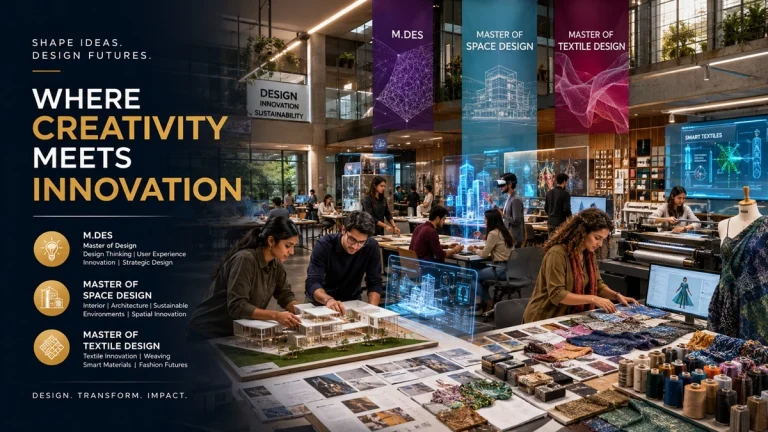
Design has gotten too broad for a single generalist master’s degree to cover properly anymore, so most institutes split things into focused tracks. Two that keep pulling in strong student interest are Space Design and Textile Design.
Master of Space Design
This one looks at how people and the spaces they occupy actually interact — not just how a room looks in a photograph, but how it behaves once real people are moving through it, sitting in it, avoiding certain corners of it. Students dig into layout, material choice, lighting, and cultural context, going well past what most people would call “interior styling.”
The scope covers residential work, commercial interiors, retail spaces, hospitality projects, and public spaces. It tends to suit students who genuinely want to know why one café makes you want to sit for three hours while another has you walking out in ten minutes.
Master of Textile Design
At the master’s level, textile design moves well past pattern and print work. Students get into material innovation, sustainable production methods, surface experimentation, and figuring out how traditional craft techniques hold up when you rework them with contemporary tools and thinking. As sustainability keeps climbing the priority list across fashion and manufacturing, designers who understand both the craft side and the responsible-production side are landing in high demand.
This path fits people who like getting their hands into actual materials and want to go further than conventional pattern work — into genuine material research territory.
Where This Is Actually Taught
Silver Oak Institute of Design (SOID) in Ahmedabad, under Silver Oak University, runs its M.Des program specifically around these two tracks — Space Design and Textile Design. Their teaching style leans heavily on studio work and live projects rather than lecture-only theory, which works well if you learn better by building something than by reading about it.
How the Learning Format Actually Works
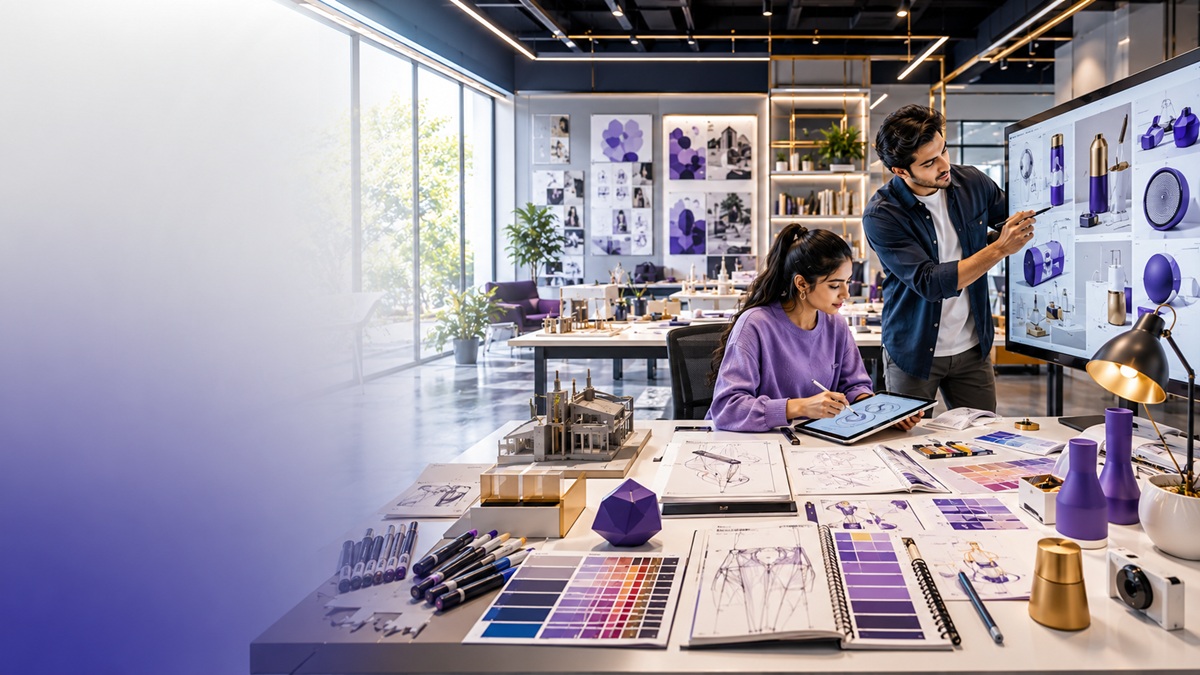
You can’t really absorb design purely from a textbook, and most postgraduate programs are structured around that fact. Expect a heavy mix of:
- Studio work with regular critique sessions — sometimes uncomfortable, usually useful
- Independent research tied to genuine industry problems, not made-up case studies
- Group projects that mimic how actual design studios operate under deadline pressure
- Guest lectures, juries, and live briefs that bring in outside industry perspective
The goal isn’t producing students who can imitate a style convincingly. It’s building designers who can walk into a problem they’ve never seen before, ask sharper questions about it than most people would think to ask, and land on a solution nobody spoon-fed them.
Career Scope After a Master of Design
One of the better arguments for doing an M.Des is just how widely the skills carry over. Design thinking isn’t locked inside design studios anymore — plenty of industries want it now.
Where Space Design Graduates End Up
- Interior Designer or Senior Design Consultant
- Spatial Planning Specialist
- Retail Design Consultant
- Exhibition and Experience Designer
- Running an independent design consultancy
Where Textile Design Graduates End Up
- Textile Developer for fashion or lifestyle brands
- Surface Designer
- Material Researcher
- Product Innovation Specialist
- Sustainable Textile Consultant
Beyond the Obvious Design Jobs
Not everyone heads straight into a studio after graduating. A fair number go on to:
- Start their own practice or consultancy from scratch
- Move sideways into academia or formal design research
- Take on leadership roles that sit between design and business strategy inside larger companies
Is an M.Des Actually Worth the Two Years?
Depends what you’re after, honestly. If you’re aiming for senior design roles, leadership positions inside a studio, or you want to go deep into something specific like sustainable materials or spatial experience design, the extra two years pay off — both in how you think and in how seriously clients or employers end up taking you.
If you just want to get into entry-level design work as fast as possible, a bachelor’s plus a strong portfolio might get you there quicker. The master’s makes the most sense once you already know design is where you’re staying long-term and you’d rather go deeper than wider.
Common Questions About Master of Design
Can I get into an M.Des without a design degree already?
Often, yes. A lot of institutes accept students from architecture, fine arts, or engineering backgrounds, as long as a portfolio or entrance test can back up the design thinking.
Which specialization has more demand right now — Space or Textile Design?
Honestly, both are growing, just for different reasons. Space Design demand tracks with real estate, hospitality, and retail expansion. Textile Design demand is being pushed by sustainability requirements across fashion and manufacturing. Neither is objectively the “safer” pick — it really comes down to which kind of problem actually interests you more.
Is the thesis compulsory in every program?
Pretty much always, yes. It’s usually the most heavily weighted piece of the whole degree, since it’s where you show you can think independently instead of just following someone else’s brief.
Can I start my own studio right after finishing an M.Des?
Yes, and a decent number of graduates do exactly that — especially in consultancy-friendly areas like spatial design or sustainable textiles. That said, a year or two of industry experience first usually makes that jump a lot smoother.
Conclusion
A Master of Design was never really about learning to design “better” in some vague, feel-good sense. It’s about learning to design on purpose — backed by research, sustainability thinking, and a real read on the people your work is actually for. Whether you’re drawn to shaping physical spaces or rethinking what a textile can do, this degree gives you the depth a three or four-year bachelor’s simply doesn’t have room for.
If you’re the sort of person who can’t walk into a room, or pick up a piece of fabric, without silently wondering why it was made that way — that’s not a quirky habit. That’s exactly the instinct this degree is built to sharpen into an actual career.