
What You’ll Learn in a Bachelor of Textile Design Degree Program
Ask ten people what a textile designer actually does, and you’ll get ten different answers. Someone will picture a person sketching prints for a fashion runway. Someone else will imagine a weaver hunched over a loom. Neither is wrong, exactly — they’re just incomplete.
A Bachelor of Textile Design degree sits in an odd, interesting spot between art, chemistry, and business. You’re not just learning to make something look nice on paper. You’re figuring out how fabric actually behaves — how a dye grabs onto one fiber and slides right off another, how a design that looks perfect on your laptop screen can fall apart once it’s printed on real cloth, and eventually, how to convince someone to pay you for your ideas.
I’ve talked to a handful of graduates over the years, and almost all of them say the same thing: they had no idea how technical this degree would get. So if you’re deciding whether to apply, or you’re already a first-year student trying to figure out what’s coming, here’s an honest look at what the coursework actually covers — and why the less exciting bits end up mattering the most.
The Foundation: Design Principles and Visual Thinking
Every program starts in more or less the same place — the basics of visual composition. Long before you’re allowed near a loom or open Illustrator to build a repeat, you’ll be drilled on things like:
- Color theory and how hues sit next to one another
- Balance, rhythm, and repetition
- Scale and proportion
- Line, shape, and texture
It can feel painfully slow if you’re eager to design “real” fabric already. But think of it like learning grammar before writing a novel — skip it, and everything you make later just looks a little off, even if you can’t say why. This is the vocabulary you’ll lean on for the rest of your career, whether you end up in upholstery fabric or luxury apparel prints.
Sketching Still Matters
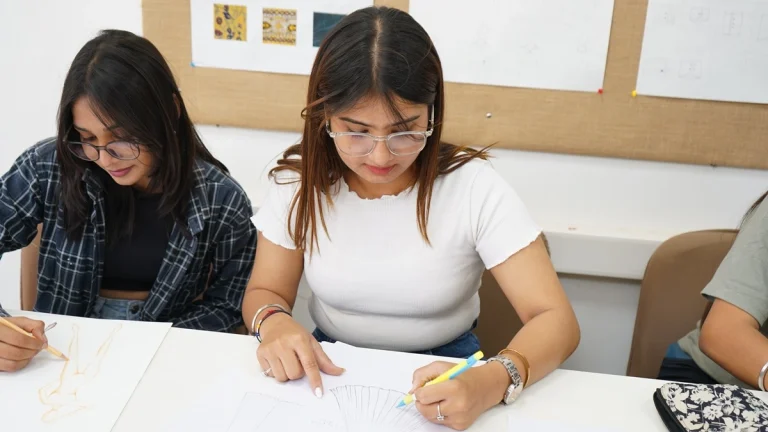
Even in an industry that’s gone almost entirely digital, hand-drawing hasn’t disappeared. Most programs push students to build real illustration chops, because sketching is still the fastest way to test an idea before committing hours to it on a screen. Expect figure drawing, botanical studies, and a lot of pattern sketching, depending on where you study.
Getting to Know Fiber and Fabric Science
This is where textile design splits off from general graphic design or fine art. You genuinely can’t design fabric well if you don’t know what it’s made of — that’s not an exaggeration, it’s just how the industry works.
You’ll cover things like:
- Natural fibers — cotton, wool, silk, linen, and what makes each one behave differently
- Synthetic fibers — polyester, nylon, spandex, and how they’re engineered in the first place
- Fabric construction — weaving, knitting, nonwoven methods
- Performance testing — durability, colorfastness, how fabric holds up to washing and wear
A designer who’s put in the time here can look at a design and already know it’ll behave differently on silk than on heavy cotton twill. That saves a lot of embarrassment later — nobody wants to hand over a gorgeous design that simply doesn’t work on the fabric it was meant for.
Honestly, employers bring this up constantly. Fabric knowledge is often what separates a designer they trust with production work from one they have to babysit. It’s not the flashy part of the degree, but it might be the most useful.
Pattern and Print Design
This is probably what most people picture when they hear “textile design,” and it does take up a big chunk of the curriculum.
Repeat Pattern Development
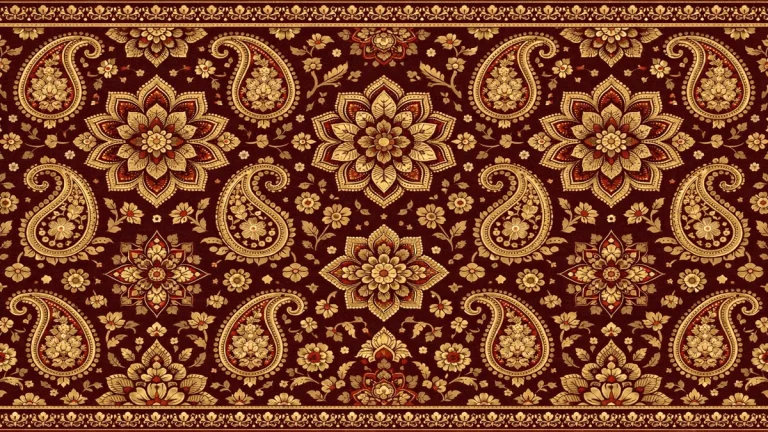
Making a pattern repeat seamlessly across a bolt of fabric sounds easy — until you try it. It has to tile cleanly in every direction, with no visible seams, no odd gaps, and no repetitive “stamping” effect that gives away where one repeat ends and the next starts.
You’ll get hands-on with the main repeat types:
- Straight (block) repeats
- Half-drop repeats
- Brick repeats
- Mirror repeats
Surface Design, the Traditional Way
Digital pattern-making gets most of the attention now, but plenty of programs still teach hands-on surface techniques:
- Screen printing
- Block printing
- Batik and resist dyeing
- Digital textile printing
There’s a reason both get taught. Some clients still want small-batch, hand-crafted fabric; others need something ready for mass digital production. Knowing both keeps you useful in more situations — and frankly, more employable.
Digital Tools You’ll Actually Use
Technology isn’t optional anymore in this field. You’ll build fluency in software like:
- Adobe Illustrator, for vector-based pattern work
- Adobe Photoshop, for texture and print manipulation
- Textile-specific CAD software — NedGraphics and Kaledo are common ones — which shows you how a pattern will actually sit on fabric, not just on a flat screen
Some schools go further and introduce 3D visualization tools that let you preview how fabric will drape or fold before you’ve printed a single yard. It sounds like a small thing, but it saves a surprising amount of wasted material and second-guessing.
Textile History and Cultural Context
Students tend to underrate this part of the curriculum until they’re a few semesters in and realize how much it quietly shapes their design choices.
Expect to dig into:
- How textile production evolved from hand looms to industrial manufacturing
- Cultural traditions from around the world — Indian block printing, Japanese shibori, West African kente cloth, and plenty more
- Design movements like Arts and Crafts, Bauhaus, or Art Deco, and how they shaped textile aesthetics
It’s not just trivia for exams. Knowing where a technique or motif actually comes from helps you avoid the kind of careless cultural appropriation that gets brands into trouble — and it gives you a much deeper pool of ideas to pull from than trend-chasing alone would.
Color Theory and Dye Chemistry
Color comes back around, but in a lot more depth than the intro-level version you covered earlier. This time you’re looking at:
- How dyes chemically bond to different fibers
- Colorfastness testing
- Trend forecasting and how palettes shift with consumer taste
- Sustainable, low-impact dyeing methods
A lot of programs are leaning hard into eco-conscious dyeing these days, mostly because the fashion and textile industries have taken real heat over water pollution and chemical runoff. If sustainability is something you care about, this is one part of the degree where you can actually push the industry in a better direction instead of just following it.
Business and Industry Skills
A design degree that skips the business side sets its graduates up to struggle. Most solid programs make time for:
Portfolio Development
You’ll spend real time building a portfolio wide enough to show range — different techniques, different fibers, different aesthetics. This is what gets you in the door for internships and jobs, so it’s worth taking seriously from day one, not scrambling to build it senior year.
Trend Forecasting
Being able to research and predict where color, pattern, and material trends are headed is a skill employers genuinely value. Anyone can copy what’s already popular. Designers who can call the next trend eighteen months out are the ones who get hired first.
Sourcing and Production Knowledge
You’ll learn how a design actually becomes a finished bolt of fabric, including:
- Working with mills and manufacturers
- Grasping minimum order quantities
- Working through cost calculations and pricing
- Talking to production teams in language they understand
Presenting Your Work
Pitching is part of the job, whether you like it or not. You’ll present to critique panels throughout the program, which is basically a dress rehearsal for pitching to real clients, buyers, or creative directors down the line.
Sustainability and Ethical Design Practices
This isn’t a side elective anymore — it’s become central to most modern programs. You’ll likely cover:
- Circular design and cutting down textile waste
- Upcycling and repurposing scraps
- Life-cycle assessment of textile products
- Fair labor practices across global supply chains
Employers now expect graduates to think about environmental impact as a matter of course, not as an afterthought. Programs that still treat sustainability as optional are doing their students a disservice, given where the industry is heading.
Where You Can Study This in India
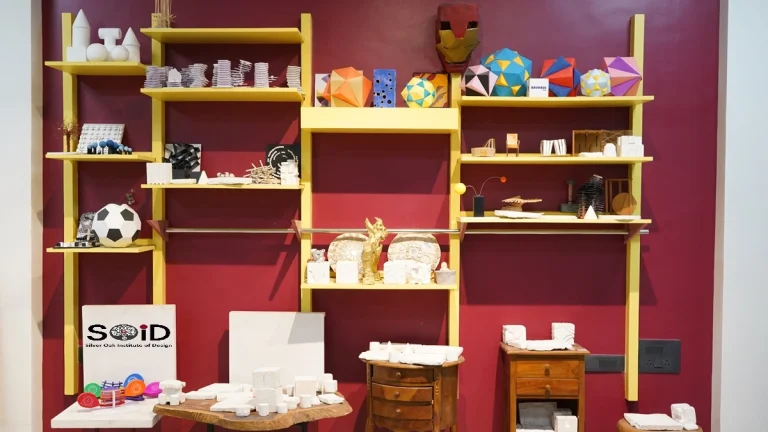
If you’re based in India, institutes like Silver Oak Institute of Design (SOID) in Ahmedabad fold textile design into a broader Bachelor of Fashion & Textile Design programme, taught as part of a 4-year B.Des structure. A few practical things to know before applying:
- Eligibility: Most B.Des programmes, SOID included, accept students from Science, Commerce, or Humanities streams, as long as they’ve cleared 10+2 with a minimum aggregate — usually around 40%.
- Getting in: Admission generally comes down to a creative aptitude test, a portfolio review, and an interview, rather than marks alone. Having even a handful of sketches or design pieces ready before you apply genuinely helps your case.
- How the degree is structured: Many Indian design schools split the four years into stages — a basic certificate after year one, an advanced certificate after year two, an advanced diploma after year three, and the full bachelor’s degree at the end.
That staged structure is worth knowing about, because it means you’re not waiting four years for any proof of progress. You pick up recognized credentials along the way.
Internships and Real-World Experience
Classroom work can only take you so far. Most programs either require or heavily push internships with:
- Fashion houses
- Home furnishing companies
- Textile manufacturers
- Independent design studios
These placements throw you into real deadlines, real client feedback, and production realities no lecture can fake. A lot of students end up getting their first job through a connection made during an internship — so it’s worth treating it like more than a box to tick.
Common Questions About Textile Design Degrees
- Do I need to know how to draw before starting this degree?
Not at an advanced level, no. A basic comfort with sketching helps, but most programs build your drawing skills up gradually. Enthusiasm on day one usually matters more than raw talent.
- Is this degree only useful for fashion careers?
Not even close. Plenty of graduates go into fashion, sure, but others end up in home décor, automotive interiors, medical textiles, or technical textiles used in sports gear and industrial applications.
- How much of the program is digital versus hands-on?
It depends on the school, but most try to balance both. You’ll spend time at a loom or a dye vat just as much as you’ll spend it in front of a screen running pattern software.
- Will I need a graduate degree to move up in this field?
Usually not. A bachelor’s degree, a strong portfolio, and some internship experience are typically enough for entry-level and even mid-level roles. A master’s makes more sense if you’re heading toward specialized research, teaching, or highly technical textile engineering work.
Conclusion
A Bachelor of Textile Design degree covers a lot more ground than most people expect going in. You end up building artistic instinct right alongside technical fiber knowledge, learning software while still keeping traditional hand techniques alive, and picking up business sense to go with the creative side. That mix is exactly why graduates end up working in such different corners of the industry.
If the idea of shaping the fabric people wear, sit on, sleep under, or decorate their homes with appeals to you, this degree hands you the tools to actually do it — not as a hobby, but as work that employers and clients can trust with real production. There are genuinely tough stretches, especially around fiber science and pattern repeats, but it’s the kind of difficulty that pays off the day you’re standing in front of a portfolio you’re actually proud of.