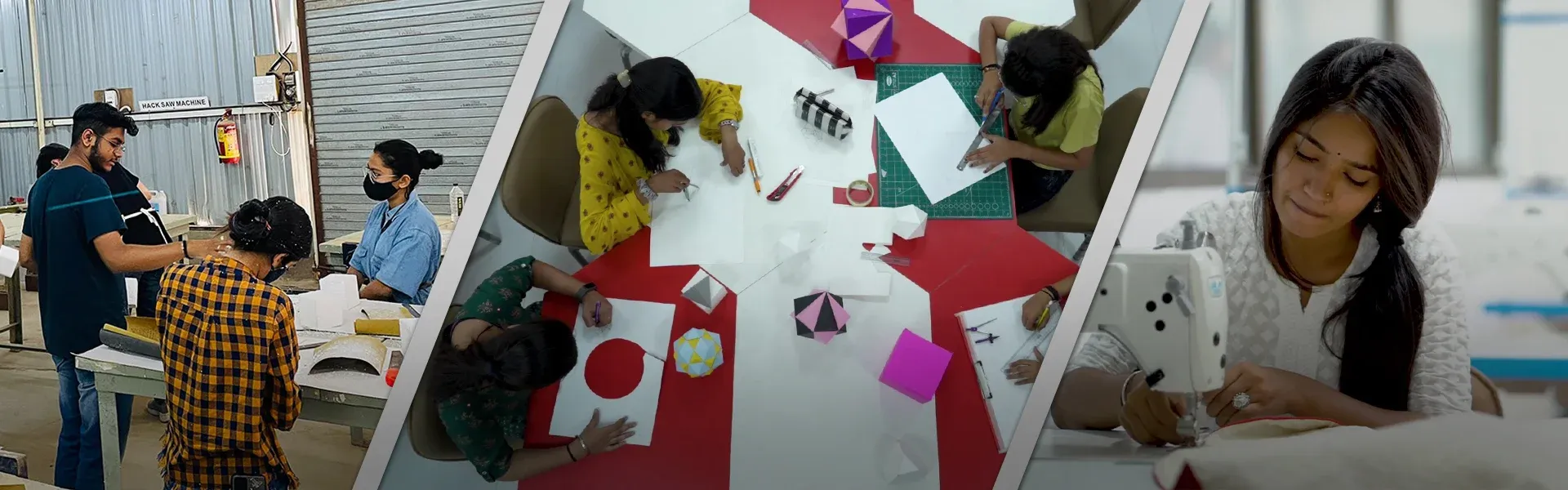
Bachelor of Fashion and Textile Design
SOID offers an integrated Fashion and Textile Design Degree Program that encompasses every significant detail that would help our students stand out in the most competitive industry.
The fundamentals of Fashion and Textile Design entail understanding the variety of textiles, their interactions with distinct types of human bodies, and learning the factors that include the development of a garment. These factors involve cultural values, seasonal changes, occasions, and a person’s comfort, style, and personality, just to name a few.
We offer in-depth knowledge of different types of textiles. The course helps the students in recognizing the difference and properties of natural and man-made fibres, the difference between handmade and machine-made, various surface development techniques, dyeing methods, and paying attention to significant details of garment construction from casual to couture. Hence, the students make the right fabric choices, use colour theories to their advantage and focus on proper fitting and finishing details which helps them go towards the most promising direction.
Our students learn from the best faculty in classrooms equipped with the best resources. Further, we offer special sessions that are arranged with master craft persons and pioneers of the industry.
HIGHLIGHTS
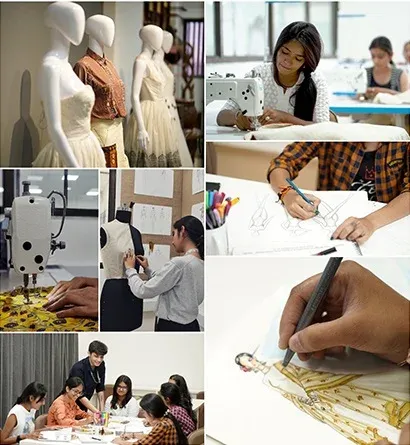
- Textile Science
- Print Design Project
- Fashion Forecasting & Trend Studies
- Fashion Illustration
- Traditional Indian Textile
- Surface Design Technique
- Fashion Styling
- Pattern Making
- Garment Construction
- Draping
- Visual Merchandising
- Fashion Marketing
- Fashion Photography
- Industry Internship & Graduation Project
Vision:
- As a premier design institute, our vision is to be recognized for excellence in education and pioneering research, making significant contributions to societal advancement and national progress.
Mission:
- To provide a dynamic academic environment where design education intersects with scholarly inquiry, fostering a culture of critical thinking, creativity and interdisciplinary collaboration.
- To integrate inquiry-driven approaches into our curriculum, empowering students to explore, experiment and discover at the intersection of design and research.
- To empower students with the knowledge, skills, and ethical framework necessary to navigate complex design challenges ethically, equipping them to become compassionate and conscientious leaders in the global design community.
Program Educational Objectives (PEOs):
- To cultivate the ability to craft innovative and visually captivating fashion and textile designs that engage diverse audiences.
- To prepare individuals to design innovative and appealing fashion and textile products that captivate diverse audiences.
- To provide the competencies to navigate shifting fashion trends, technological advancements and sustainable methodologies in the fashion and textile sector.
Program Outcomes (POs):
- Design Knowledge: The ability to give comprehensive knowledge of design methodology, production and its management in the field of design.
- Problem Analysis: Systematically identifying, understanding and defining the challenges or opportunities that require creative solutions within a given context or problem space, guiding the design process towards effective problem-solving and innovation.
- Design/Development of Solutions: The ability to design a system, component or process to meet desired needs within realistic projects related to economic, environmental, social, political, ethical, health and safety, manufacturability and sustainability.
- Problem Solving: The ability to identify, formulate and solve technical problems.
- Professional Skills: To demonstrate Entrepreneurial and Business Skills, Management, Leadership and Team Work.
- Individual and Team Work: The ability to function effectively as an individual and as a member or leader in diverse teams on multidisciplinary environments.
- Communication Skills: Effectively conveying ideas, concepts and solutions to various stakeholders through visual, verbal and written means, facilitating collaboration, understanding and alignment throughout the design process.
- Ethics: The understanding of professional and ethical responsibility.
- Project Management and Finance: Planning, organizing and overseeing tasks, resources and timelines to ensure efficient execution of design projects, while finance in design encompasses budgeting, cost estimation and financial analysis to optimize resources and achieve project goals within financial constraints.
- Life-long learning: Recognize the need for and have the preparation and ability to engage in independent and life-long learning in the broadest context of technological change.
- The Designer and Society: Apply reasoning informed by contextual knowledge to assess craft, societal, health, safety, legal issues and the consequent responsibilities relevant to the professional design practice.
- Environment and Sustainability: Understand the impact of the professional design solutions in societal and environmental contexts and demonstrate the knowledge of and need for sustainable development.
Program Specific Outcomes (PSOs):
- Creative Fashion enables graduates to craft trendsetting designs that captivate diverse audiences and embody contemporary aesthetics, enriching the fashion industry with fresh creativity and innovation.
- Textile Innovation empowers graduates to spearhead advancements in textile design through pioneering techniques, materials and processes, leading to the creation of innovative and sustainable products that redefine the landscape of product design.
Course Structure:
Semester 1
|
First Semester |
|||
|
Sr. No. |
Course Name |
||
|
01. |
Digital Representation I |
||
|
02. |
History of World Art |
||
|
03. |
Basics of Design Drawing |
||
|
04. |
Basics of Colour Theory |
||
|
05. |
Geometrical Construction |
||
|
06. |
Material Studies |
||
Semester 2
|
Second Semester |
|||
|
Sr. No. |
Course Name |
||
|
01. |
History of Indian Art |
||
|
02. |
Basic Photography |
||
|
03. |
Advanced Design Drawing |
||
|
04. |
Advanced Colour Appreciation |
||
|
05. |
Principles & Elements of Design |
||
|
06. |
Design Thinking |
||
|
07. |
Digital Representation II |
||
Semester 3
|
Third Semester |
|||
|
Sr. No. |
Course Name |
||
|
01. |
Fashion Illustration I |
||
|
02. |
History of Indian Costume |
||
|
03. |
Fashion Studies |
||
|
04. |
Textile Studies I |
||
|
05. |
Draping I |
||
|
06. |
Pattern Making & Garment Construction I |
||
|
07. |
Surface Design Techniques I |
||
|
08. |
Design Process I |
||
Semester 4
|
Fourth Semester |
|||
|
Sr. No. |
Course Name |
||
|
01. |
Textile Studies II |
||
|
02. |
History of World costume |
||
|
03. |
Fashion Marketing |
||
|
04. |
Fashion Illustration II |
||
|
05. |
Pattern Making & Garment Construction II |
||
|
06. |
Draping II |
||
|
1. |
Surface Design techniques II |
||
|
08. |
Design Process II |
||
Semester 5
|
Fifth Semester |
|||
|
Sr. No. |
Course Name |
||
|
01. |
Traditional Indian Textiles & Costumes |
||
|
02. |
Fashion Merchandising |
||
|
03. |
Fashion Illustration III |
||
|
04. |
Pattern Making & Garment Construction III |
||
|
05. |
Draping III |
||
|
06. |
Craft Project & Digital Documentation |
||
|
07. |
Advance Surface Design |
||
|
08. |
Fashion Styling & Photography |
||
|
09. |
Design Process III |
||
Semester 6
|
Sixth Semester |
|||
|
Sr. No. |
Course Name |
||
|
01. |
World Textiles |
||
|
02. |
Fashion Illustration IV |
||
|
03. |
Pattern Making & Garment Construction IV |
||
|
04. |
Grading & CAD |
||
|
05. |
Manufacturing Process |
||
|
06. |
Portfolio Development |
||
|
07. |
Design Process IV |
||
|
08. |
Creative Pattern Making |
||
|
09. |
Couture/ Denim/ Craft based project |
||
Semester 7
|
Seventh Semester |
|||
|
Sr. No. |
Course Name |
||
|
01. |
Visual Merchandising |
||
|
02. |
Entrepreneurship Development |
||
|
03. |
Men’s Wear Project |
||
|
04. |
Research Methodology |
||
|
05. |
Industry Internship |
||
|
06. |
Film, Fashion & Images |
||
|
07. |
Fashion Luxury Management |
||
Semester 8
|
Eighth Semester |
|||
|
Sr. No. |
Course Name |
||
|
01. |
Graduation Project |
||
